The SeeElefant: A Recycling Ship for Ocean Plastic
The SeeElefant is One Earth One Ocean’s recycling ship: a converted bulk freighter being fitted with systems to sort, shred, process and press plastic waste on board. Instead of waiting for recycling plants to be built on land, it brings recycling to the places that need it most.
- Project of
- One Earth One Ocean
- Project lead
- Dr. Harald Frank
- Planned capacity
- About 60,000 tonnes of plastic a year
- Timeline
- First ship planned for 2027, followed by a three-year Mediterranean demonstration tour
- Recognition
- German Federal Ecodesign Award (Bundespreis ecodesign), 2019
- Carbon credits
- Up to 32,000 a year, per a South Pole letter of intent (November 2025)
Why a recycling ship
Many of the places where plastic pours into rivers and seas have no sorting or recycling plants, so even plastic that is collected has nowhere to go. The SeeElefant is designed to be mobile and scalable: it can anchor at plastic pollution hotspots that lack recycling capacity, process waste collected on land and at sea, and return it to the materials cycle. The plan is to build several SeeElefants and operate them around the world.
It completes One Earth One Ocean’s “maritime garbage collection” chain. The small SeeHamster and larger SeeKuh boats collect plastic from rivers, harbours and coasts; the SeeElefant turns what they collect into material that can be used again.
How it works
- Sorting the collected plastic by type on board.
- Shredding and processing it into material that recyclers and manufacturers can use.
- Pressing material that cannot be processed on board so it can be shipped efficiently.
- Plastic to fuel, later: once industrial-grade equipment is available, One Earth One Ocean plans to convert some plastic on board into sulphur-free oil. Our technology guide explains why plastic-to-fuel is debated among experts.
A three-year tour of the Mediterranean
The first working SeeElefant, planned for 2027, will prove itself on a three-year tour of the Mediterranean. It will anchor for up to two months in each port city to process local plastic waste and run public training on plastic pollution and prevention, the circular economy, and AI-assisted sorting and recycling. Talks with several major port cities are under way.
Paying its own way
On 12 November 2025 the climate specialist South Pole confirmed in a letter of intent that the SeeElefant could generate up to 32,000 carbon credits a year on the voluntary carbon market, expecting at least 90 percent of the processed plastic to qualify. That gives the ship a reliable income toward operating and maintenance costs and makes it more attractive to private and institutional investors.
Founder Günther Bonin called South Pole’s assessment a quantum leap for the project, confirming its economic viability and One Earth One Ocean’s path from garbage collector to a provider of complete maritime recycling systems. Project lead Dr. Harald Frank said the potential revenue from credits gives the SeeElefant a solid foundation for its operation.
Presented at EarthX
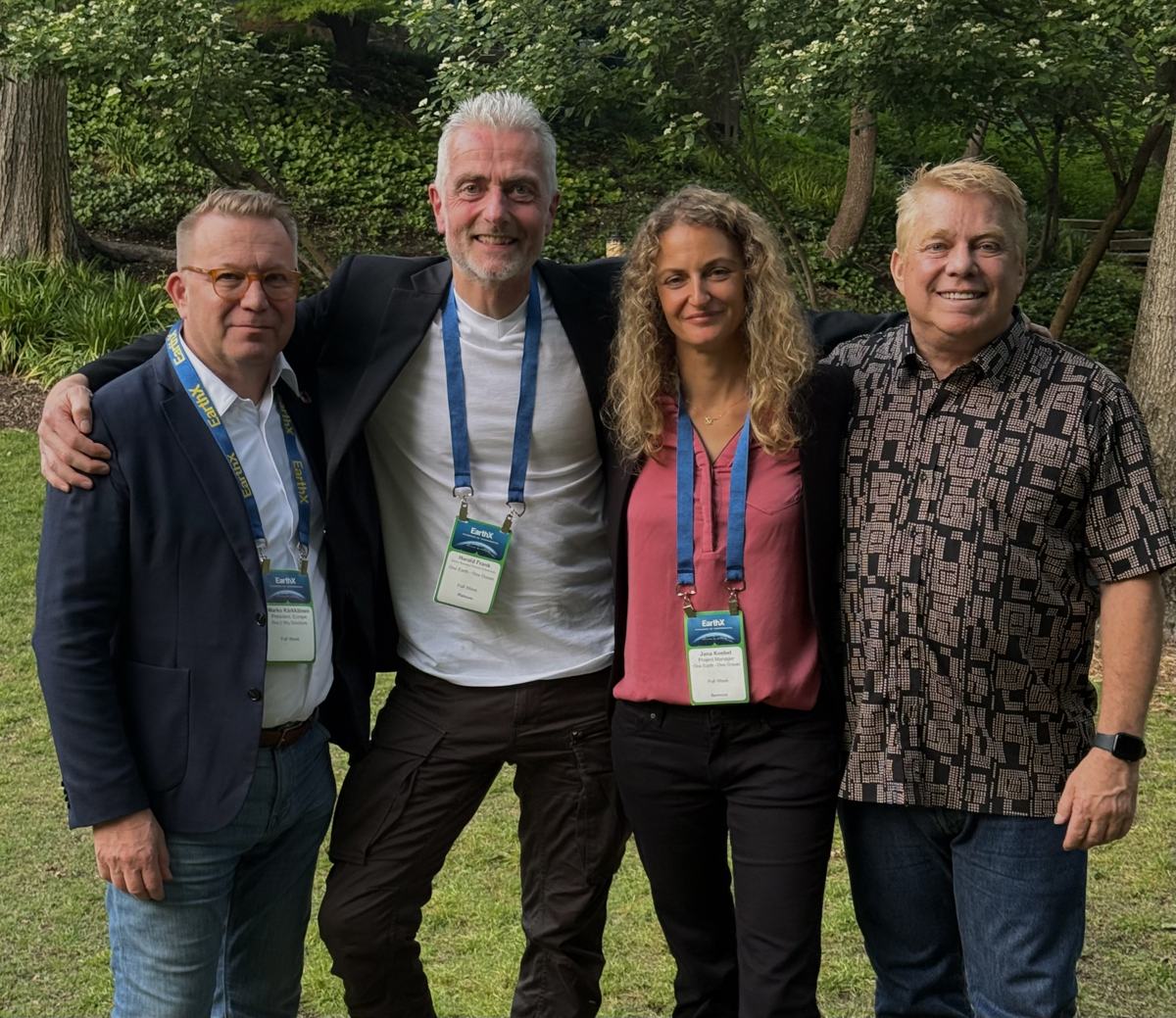
Dr. Harald Frank and Jana Koebel presented the SeeElefant, along with all of One Earth One Ocean’s projects, at the Environmental Xperience at EarthX in Dallas.
Dr. Harald Frank
Project Lead, SeeElefant, One Earth One Ocean
Economist based in Kiel who led the feasibility study for maritime garbage collection and now leads the SeeElefant project.
Jana Koebel
Advisor, Plastic Projects, Rotary Club of Newport Beach | Project Manager, One Earth One Ocean | Founder, Seas & Straws
Eco warrior leading One Earth One Ocean’s recycling project in Bocas del Toro, Panama. Meet Jana.
How to get involved
- Investors and sponsors can help finance the first ship.
- Port cities on the Mediterranean can host the SeeElefant during its demonstration tour.
- Rotary clubs can partner on education programmes and collection projects that feed the ship.
- Everyone can support One Earth One Ocean through its website.
See the SeeElefant on One Earth One Ocean’s site Back to One Earth One Ocean